Factory License Consultant Guide: How Professional Assistance Can Simplify Compliance
03, Sep 2026
6
For a manufacturing business, regulatory compliance is an ongoing responsibility rather than a one-time task. Among the approvals that may apply to eligible manufacturing establishments is a factory license.
Although the application may appear to be a simple documentation exercise, businesses often encounter difficulties when they have to understand the applicable authority, prepare technical information, coordinate building documents, and respond to departmental queries.
This is where a factory license consultant can provide useful support.
A consultant does not replace the responsibility of the factory owner to comply with applicable laws. Instead, professional assistance can make the administrative side of the process more organized and easier to understand.
What Does a Factory License Consultant Do?
The role of a consultant can vary depending on the service arrangement and the requirements of the establishment.
Generally, a consultant may help a business:
- Understand applicable licensing requirements
- Identify relevant documentation
- Review factory-related information
- Prepare application details
- Coordinate supporting documents
- Identify inconsistencies before submission
- Assist with responses to authority queries
- Prepare businesses for inspection-related requirements
- Support modifications and renewals
This can be particularly valuable for first-time entrepreneurs.
Why Applications Can Become Complicated
Factory licensing may involve information about the premises, machinery, workers, manufacturing process, power usage, and business structure.
If information is incomplete or inconsistent, the authority may request clarification.
For example, if the factory address differs between documents or machinery details are incomplete, the applicant may need to correct the information before the application can proceed smoothly.
Professional document review can help reduce such avoidable issues.
Understanding the Factory License Process
The process generally follows a sequence.
First, the business determines whether factory licensing requirements apply to its establishment.
Next, it identifies the relevant authority and prepares the required information.
The application is then submitted with supporting documents and applicable fees.
The department reviews the application. Depending on the circumstances, an inspection may also be conducted.
If the authority raises an observation, the business needs to respond with appropriate clarification or documents.
Once the applicable conditions are satisfied, the relevant approval can be issued.
Does Every Factory Follow the Same Process?
No.
Requirements may vary based on the state, location, manufacturing activity, workforce, power usage, machinery, and other factors.
This is why online articles that provide one universal document list should be used carefully.
A better approach is to start with the specific facts of the factory and identify which requirements apply.
MCD Factory License: What Should Delhi Businesses Check?
Businesses searching for an MCD factory license should first understand the distinction between municipal approvals and factory-related regulatory requirements.
A manufacturing premises may require different permissions depending on the property and business activity.
The correct authority can therefore depend on the specific requirement being addressed.
Before submitting an application, businesses should verify the relevant jurisdiction and approval category.
What Should You Ask a Consultant?
If you are planning to hire a consultant for factory license, ask questions before engaging the service provider.
A professional consultant should be able to explain:
1. Applicability: Why does the factory require the approval?
2. Documents: Which documents are needed for this particular establishment?
3. Fees: Which amounts are government fees and which are consultancy charges?
4. Process: What stages are involved?
5. Inspection: Is an inspection expected?
6. Queries: Who will assist if the authority raises questions?
7. Post-approval: Is support available for renewal or modification?
These questions help businesses understand exactly what they are paying for.
Benefits of Professional Support
Professional support can be helpful in several ways.
It can reduce the time spent trying to understand unfamiliar forms and procedures. It can also help businesses organize documents and identify missing information.
More importantly, a consultant can provide a structured process for dealing with regulatory communication.
However, businesses should be cautious of anyone claiming that a license can be guaranteed regardless of actual compliance. Regulatory approvals remain subject to applicable laws and the decisions of the relevant authority.
How Agile Regulatory Helps
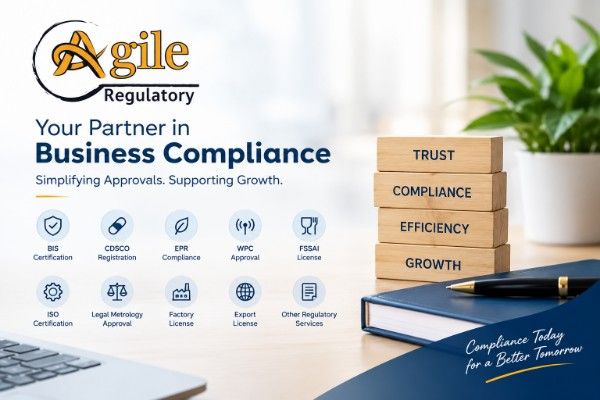
Agile Regulatory supports businesses with regulatory and compliance-related services.
Our approach is focused on understanding the client's business requirements and helping organize the relevant documentation and procedural steps.
For factory licensing, this can include assistance with requirement assessment, documentation, application-related support, and responses to regulatory queries, depending on the scope of engagement.
The goal is to make compliance understandable and manageable rather than overwhelming.
A Simple Preparation Checklist
Before beginning the application, keep the following information ready:
- Factory location
- Nature of manufacturing activity
- Number of workers
- Machinery information
- Power details
- Building information
- Ownership or lease documents
- Business registration information
- Relevant technical documents
- Applicant details
Having this information organized can make the initial assessment much easier.
Final Thoughts
Hiring a factory license consultant is not mandatory in every situation. Businesses that understand the requirements and have the necessary resources may manage the process themselves.
However, professional assistance can be useful when the application involves multiple documents, technical details, inspections, or unfamiliar regulatory procedures.
For businesses seeking structured support, Agile Regulatory can help explain the applicable process and assist with the administrative aspects of factory licensing.
The best compliance strategy is not simply obtaining a license quickly. It is understanding the requirements, preparing accurate information, and ensuring that the manufacturing premises operates within the applicable regulatory framework.
share Share now

 All Services
  Service Experts
  Jobs
Jobs  Explore Travel
  News & Magazines
  Events
  Products
  Coupon & deals
  Blogs
Blogs  Community



.png)

.png)











 Home
Home Search
 Jobs
Jobs Support