Study in Denmark for Indian Students: Your Guide to a Global Education
02, Sep 2026
10
For Indian students looking beyond traditional study destinations, Denmark can offer a refreshing academic experience built around creativity, practical learning and international exposure. The country has a modern higher-education system, a strong focus on innovation and a wide selection of English-taught programmes.
Students planning to Study in Denmark for Indian Students can choose from bachelor's, master's, professional and other higher-education programmes. Denmark's official education portal lists more than 500 English-taught study programmes, giving international applicants plenty of options across different fields.
Why Should Indian Students Choose Denmark?
Danish education is different from a traditional lecture-focused approach. Students are encouraged to ask questions, share ideas, work in teams and solve practical problems. This can help them develop skills that are useful beyond the classroom.
The Danish education system also places importance on critical thinking, creativity and collaboration. Higher-education institutions follow national quality requirements, and Danish programmes use the European Credit Transfer and Accumulation System (ECTS), which supports international recognition and credit transfer.
For Indian students, this learning environment can be a good opportunity to become more independent and confident while gaining international academic experience.
Popular Courses for Indian Students
Denmark offers programmes in many areas. Depending on their academic background, Indian students can explore:
-
Computer Science
-
Data Science
-
Artificial Intelligence
-
Engineering
-
Business and Management
-
Finance
-
Economics
-
Biotechnology
-
Environmental Science
-
Renewable Energy
-
Design and Architecture
-
International Business
Students should choose a course based on their previous qualification, interests and career plans rather than simply selecting a programme because it is popular.
Top Danish Universities
Indian students can explore several well-known Danish institutions, including:
-
University of Copenhagen
-
Aarhus University
-
Aalborg University
-
University of Southern Denmark
-
Copenhagen Business School
-
Technical University of Denmark
-
IT University of Copenhagen
Each university has different academic strengths and admission criteria. Students should compare individual programmes instead of choosing an institution based only on its overall reputation.
English-Taught Programmes
Language is an important consideration for international students. Denmark offers many programmes taught in English, particularly at higher-education level.
However, applicants must still meet the English-language requirements of their selected programme. Requirements can differ between institutions and courses. Official guidance lists English proficiency levels and accepted test routes for different programme requirements.
Before applying, Indian students should check the exact English requirement on the university's official programme page.
Admission Requirements
Admission requirements depend on the university, study level and selected programme.
For undergraduate education, applicants generally need qualifications equivalent to a Danish upper-secondary education and must satisfy any specific subject and grade requirements for their chosen course.
For master's programmes, students normally need a relevant bachelor's degree or equivalent qualification.
Common documents may include:
-
Academic certificates
-
Mark sheets and transcripts
-
Bachelor's degree for postgraduate programmes
-
Passport
-
CV
-
Motivation letter
-
English-language test results
-
Recommendation letters, where required
-
Other programme-specific documents
Because requirements vary, students should always verify the criteria directly with the university.
Tuition Fees in Denmark
Tuition fees depend on nationality and programme. Students from the EU/EEA and Switzerland generally study without tuition fees, subject to the applicable rules. Most other international students are required to pay tuition.
The official Study in Denmark portal currently gives an indicative annual tuition range of approximately €6,000–€16,000 (DKK 45,000–120,000) for full-degree students who pay tuition. Exact fees depend on the institution and programme.
Indian students should therefore calculate the total yearly budget rather than looking only at tuition.
Living Expenses
Accommodation and daily living costs should also be included in the financial plan.
Major expenses can include:
-
Accommodation
-
Food and groceries
-
Public transportation
-
Health-related expenses
-
Study materials
-
Mobile and internet
-
Personal expenses
The actual amount depends on the city and lifestyle. Students living in larger cities may need a higher monthly budget.
Sharing accommodation, preparing meals at home and using student discounts can help manage everyday expenses.
Scholarships for Indian Students
Scholarships can make international education more affordable for eligible students. Denmark offers a limited number of government scholarships through participating institutions for certain highly qualified students from outside the EU/EEA and Switzerland. Depending on the institution, support may include full or partial tuition fee waivers and, in some cases, assistance with living expenses.
Indian students should research scholarships before submitting applications because deadlines and eligibility conditions can vary.
Student Visa and Residence Permit
Indian citizens are non-EU/EEA nationals and generally need a Danish residence permit to study in Denmark.
To apply, students must first be admitted to an approved higher-education programme. Danish authorities also require applicants to meet the relevant conditions for residence and study.
The current Danish Agency for International Recruitment and Integration information lists a processing fee of DKK 3,060 for higher-education student residence applications and a normal processing time of about two months, although cases requiring additional information can take longer.
Students should check the latest official requirements before submitting their application because immigration rules and fees can change.
Application Process
A well-planned application can make the process much easier.
Step 1: Select Your Course
Start by identifying the subject and degree level that match your academic background and career goals.
Step 2: Research Universities
Compare curriculum, tuition fees, location, entry requirements and career-related opportunities.
Step 3: Check Eligibility
Make sure your Indian qualification meets the academic and subject-specific requirements.
Step 4: Prepare Documents
Keep your transcripts, certificates, passport, CV, motivation letter and language test results ready.
Step 5: Submit the Application
Follow the application process specified by your chosen institution. Undergraduate applications can involve Denmark's coordinated admission system, while master's admissions are handled separately by individual universities.
Step 6: Apply for Residence Permit
After receiving the required admission, complete the Danish student residence-permit process.
Career Opportunities
Studying in Denmark can help Indian students develop academic knowledge as well as practical and interpersonal skills. Career opportunities will depend on the selected field, qualifications, experience and individual capabilities.
Graduates may explore areas such as:
-
Information Technology
-
Engineering
-
Finance
-
Business Development
-
Data Analytics
-
Renewable Energy
-
Biotechnology
-
Marketing
-
Consulting
-
Research
Students should also investigate internships, university-industry projects and career support when comparing programmes.
Student Life in Denmark
Life in Denmark can be an important part of the international study experience. Students can join university clubs, attend cultural events, participate in sports and meet people from different countries.
The collaborative nature of Danish education also means that group work is often an important part of academic life. This can help international students improve communication and teamwork skills.
Learning a few basic Danish phrases can also make everyday interactions easier, even when the academic programme is taught entirely in English.
Important Tips for Indian Students
Before starting your journey, keep these points in mind:
-
Start university research early.
-
Choose an accredited and suitable programme.
-
Check academic and language requirements carefully.
-
Compare total tuition and living expenses.
-
Research scholarships before the deadline.
-
Keep your documents organised.
-
Plan accommodation in advance.
-
Understand residence-permit requirements.
-
Check official sources for the latest information.
-
Choose a course that supports your long-term career goals.
Final Thoughts
Denmark can be an attractive destination for Indian students who want an international education based on practical learning, collaboration and innovation. With English-taught programmes and study options across technology, business, engineering, science and other fields, students can find pathways suited to different academic interests.
For those planning to Study in Denmark for Indian Students, the key is preparation. Research your programme carefully, understand the complete cost, check eligibility, prepare your documents early and follow the latest university and immigration guidelines. A thoughtful approach can help turn an international education goal into a well-planned academic journey.
share Share now

 All Services
  Service Experts
  Jobs
Jobs  Explore Travel
  News & Magazines
  Events
  Products
  Coupon & deals
  Blogs
Blogs  Community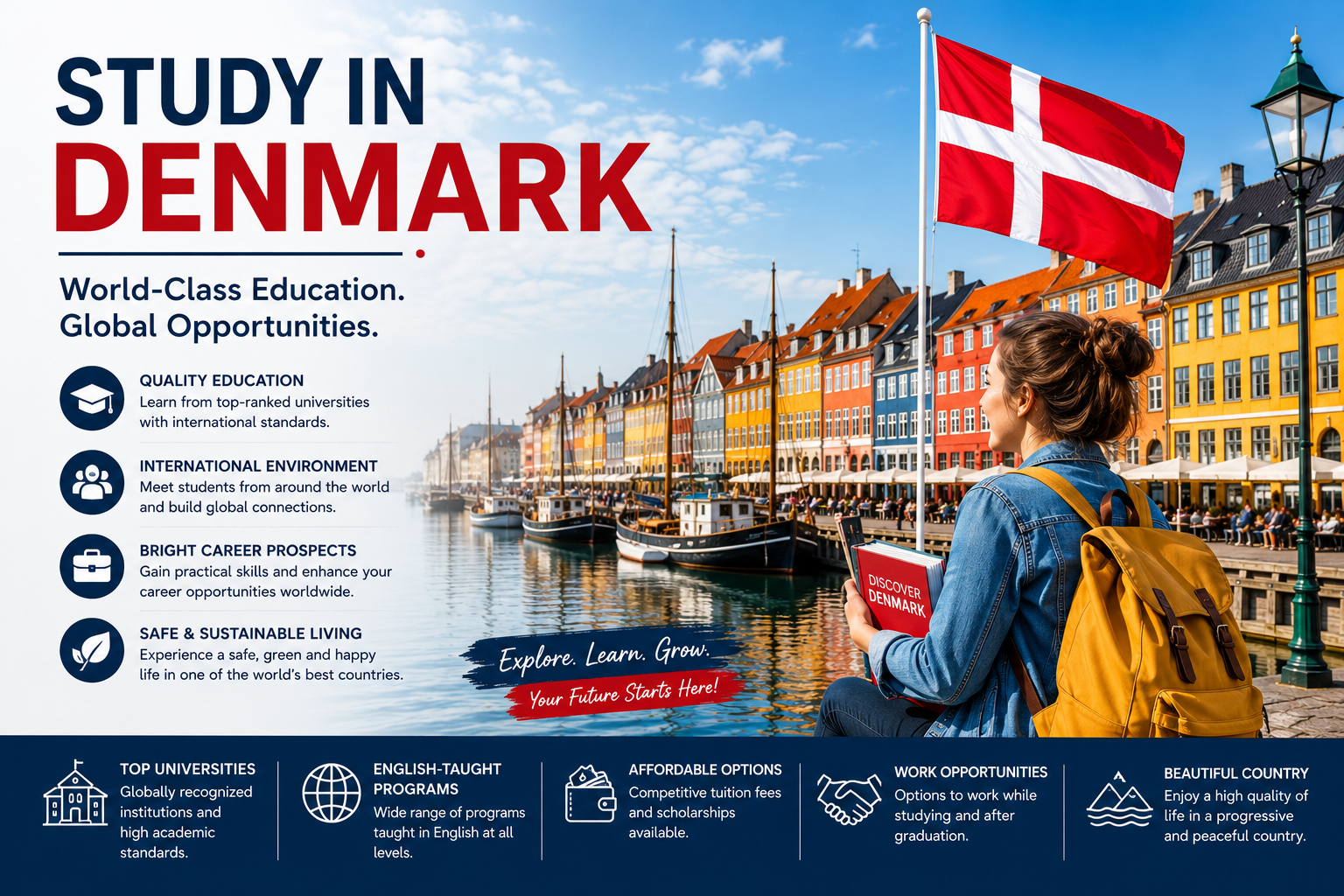




 Home
Home Search
 Jobs
Jobs Support